 UKEC
UKECCEKU
Paku Berkarat
OpinionsLeia Emeera
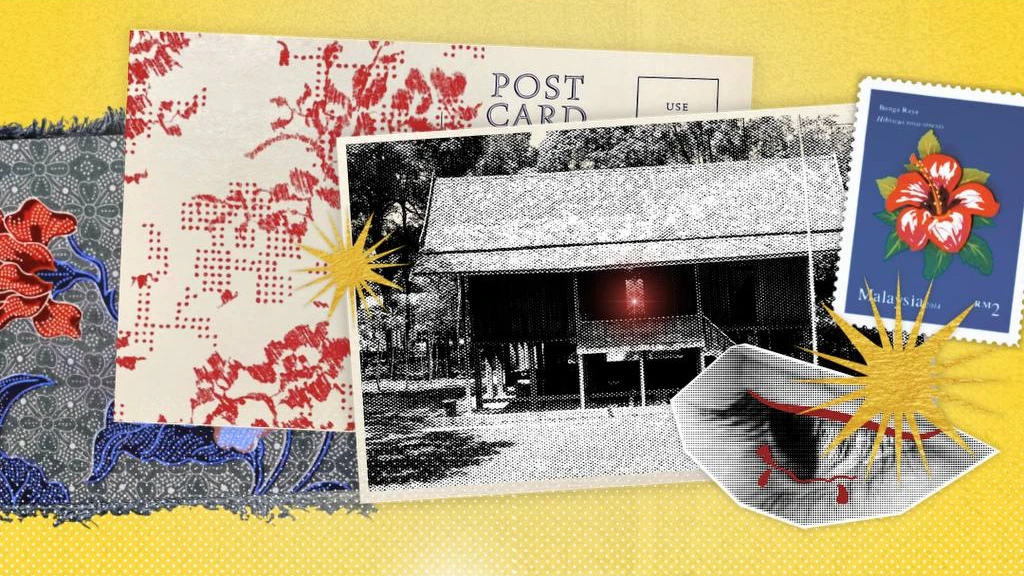
“Biar mati anak, jangan mati adat”: Let your child die before tradition. While this proverb is not necessarily a reflection of my personal beliefs – it is exemplary of how deeply drenched tradition is within Malaysia. As a result, emphasis was placed on it through the stories and passing adages of my elders, and in turn, this has cemented my appreciation for our lore. There is so much our culture has to offer past food and the spectacles of our twin towers – perhaps it is time to distance ourselves from dominant cultures and re-engage in our stories of old.
To simply put what I mean by “dominant culture” without sacrificing precision, I would put it this way. The widespread nature of the western mythos makes media on them easily accessible. Since its context has been spoonfed globally, readers do not need to take extra steps to inform themselves of why, for example, a feeble wooden stake may be so powerful. Or, I implore you to ask anyone how they would go about slaying a werewolf. Although my family does not believe in folklore, the placenta I was developing in lays buried in our backyard, with a bed of nails, to ward off the spirit of the Pontianak. The paku berkarat – the rusty nail – is our silver bullet.
Our folklore truly is a goldmine – take the Hantu Tetek for example. A fearsome force in the average Malaysian child's heart and a useful tool for their caretakers – is a comical one. Translating to “boob ghost”, Hantu Tetek is a spirit with obnoxiously large breasts. Children would be warned against playing hide and seek at night, because they'd be caught by her and trapped under what she's packing, indefinitely. Her chest is a partial gateway to a sort of spiritual limbo – victims would be able to see the overworld, but will fail to make contact with its mortals. The Pontianak’s mythos is a little less light-hearted. She is a vampiric floating head, whose body lies in the same barrel it goes to lay in daylight. While the details of her appearance and methods of killing are points of contention across households and regions, it is well agreed upon that one is born from the grief of bearing a stillborn child. Grandmothers would tell their grandchildren not to utter her name, so as to not summon her. A nail can be driven into the neck of her restful body to pacify the Pontianak.
More interestingly, what the two have in common is that they are both depicted as hysterical women, lashing out from grief. The Hantu Tetek mourns the loss of her children, and the Pontianak laments a child she was unable to raise. They are not to be killed either – only made docile or passive, back into a quiet and gentle woman. It is not just these two haints that share this leitmotif. The Lang Suir is a spectre of a woman who has died during childbirth and the Penanggal is a parasitic female who preys on infants – it is quickly made evident that in Malaysian antiquity, to be a wife and a mother is all a woman has. Once these roles are removed, its loss manifests into the macabre.
These prominent fictitious figures are only three of many. Our folklore has a depth that is worth discussion, past its sanguine veneer. While undoubtedly interesting, we owe it to ourselves to fully engage in our oral and written literature, and to open informed conversations, however introductory.