 UKEC
UKECCEKU
A Democratic Zoo
AdvocateKeith Phoon
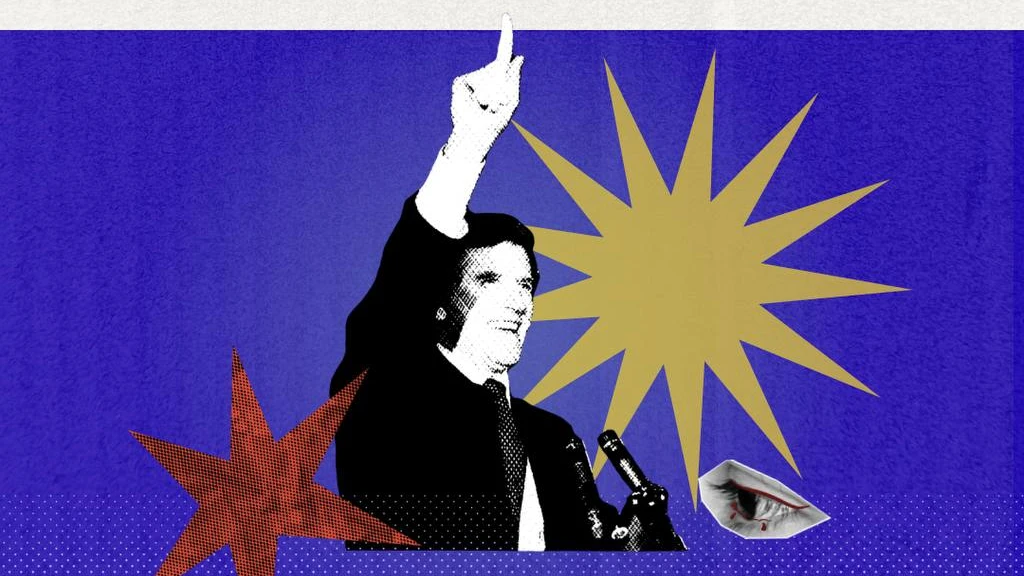
“Democracy”, in its Latin term of “democratia”, refers to a concept whereby a nation is ruled by its people, in simple words ‘people rule’. Hence, it is not peculiar why people support democracy, for who does not want a nation to be run by people? Yet, in Greece, in ancient Greece to be exact, one of the greatest minds of his time disdained democracy. He argued that a system where elections take place and people vote for their representatives do not reflect meritocracy. Many people disagreed, of course, that was after all,the way of life who dared to question it? Well, Socrates did, and his reasons are still evidence in modern day
In essence, the concept of an election meant people could choose who came into power. Hence, if played correctly, not only does it mean their voices are heard, but merit is achieved since who will vote a monkey into power? Be that as it may, in reality monkeys often do come in power along with other creatures of the zoo. Why so? The answer is very simple. As Socrates raised, in an election it’s often not the finest who win. Rather it is the candidate who swindles the most by promising Heaven and Earth only to deliver soil and manure. More often than not, people will be more drawn towards issues which seem important only to realised too late that these issues matter little in their life. Such is why monkeys can be elected in, as they can make a lot of noise to get your attention. At times, their actions also drawn your interest (it is undeniable that when a monkey rides a unicycle, people will be entertained), the monkey will end up leading the people to be so distracted that they forget that he is not a human, he cannot speak nor make policies. Nevertheless, he is interesting and he gets the vote. This, dear reader, is sadly the reality of politics.
For those who are not impressed with the monkey analogy and still wish to see real-life examples, the simplest place to look is social media. You will see many notorious leaders in Malaysia, names such as Akmal Salleh and Sanusi Nor come to mind. In almost every speech or event, like monkeys they make all sorts of noise, sometimes even going onto the field to play soccer in order to draw even more attention. These acts, though simple, drag attention and votes as people forget that these politicians are absolutely bumbling buffoons who raise matters of pigs, socks, and whatever is on the donkey cart to throw at people (just like a monkey). Silly enough, they win elections and not with small numbers, yet when it comes to governing, well, it is up to you, dear reader,, to decide and compare.
Akmal and Sanusi alone are not the only examples why democracy fails. Earlier, I wrote that other creatures from the zoo can, too, make an appearance. The reason I said so is because a zoo represents a lot of animals, wise owls, stubborn donkeys, and of course, the dear monkey which I have mentioned in this article at least 10 times. The zoo, essentially, is a metaphor for a political party. Every party has their wise members, stubborn members and foolish ones. Nevertheless, you often do not split these members apart and look at them as a whole like a zoo, if the zoo is reputable you will say good things even though there are a few lousy exhibits; if the zoo is horrendous, whereby a crocodile ate a child, nothing can amend it’s reputation not even if their the only zoo which houses a unicorn. That is exactly how a political party works, whereby parties which have a good name can hide its nasty members and parties which have a horrendous reputation would need more than a unicorn to save them.
This same logic applies to elections, where people often vote by party rather than by individual candidate. The greatest example being from the UK parliament, in the 2024 general elections members such as Suella Braverman and Robert Jenrick were elected under the banner of the Conservative party, yet, they decided to ‘jump ship’ to reform later on. Many people were angered because like the zoo analogy, they voted based on the zoo’s (party’s) reputation, ignoring whether the exhibit (candidate) was good or not. By voting in such a manner, the concept of merit is ultimately destroyed.
Hence, it is a painful thing to see that our democratic system can be so easily analogued to resemble a zoo, and its members to resemble animals. It is as such, logical, why Socrates deemed that democracy is not a beautiful system because allowing people to vote does not necessarily mean electing smart people. Therefore, what is the solution? Well, I sadly do not have one, and neither did Socrates either, the only microscopical hope for an answer perhaps is to become part of the ‘zoo’ and amend the problems of democracy. Nevertheless to do so, you must first win against the other creatures and complete a very long process. A process of which is much more ineffective compared to directly appointing field specialists or experts into the government.
In essence, the crux of this article is not merely to criticize democracy, portraying its downfall into a ‘zoo’, but also to raise awareness to fellow voters that a person who portrays themselves as capable, may in reality be incompetent too. Not all technocrats know statistics, they may be using fancy terms to describe themselves, neither do all lawyers protect the law to the end, as they may find loopholes for their benefit. Hence, we as the current or future voters must ensure that our dear minds are independent from political propaganda, from fake promises, and from ‘reformists’ who end up hoping for a new party before the parliament even ends. For however interesting the animals in a zoo are, they are after all animals, they do not have the capacity nor competency to vote.